

High-Functioning Anxiety vs. Perfectionism: What is the Difference?

From the outside, you look like you have it all together and are in control. You hit deadlines early, double-check every detail, maintain high standards for yourself, and consistently deliver results. Colleagues, coaches, and friends might describe you as ambitious, dependable, or a “high-achiever”.
But inside? It feels completely different.
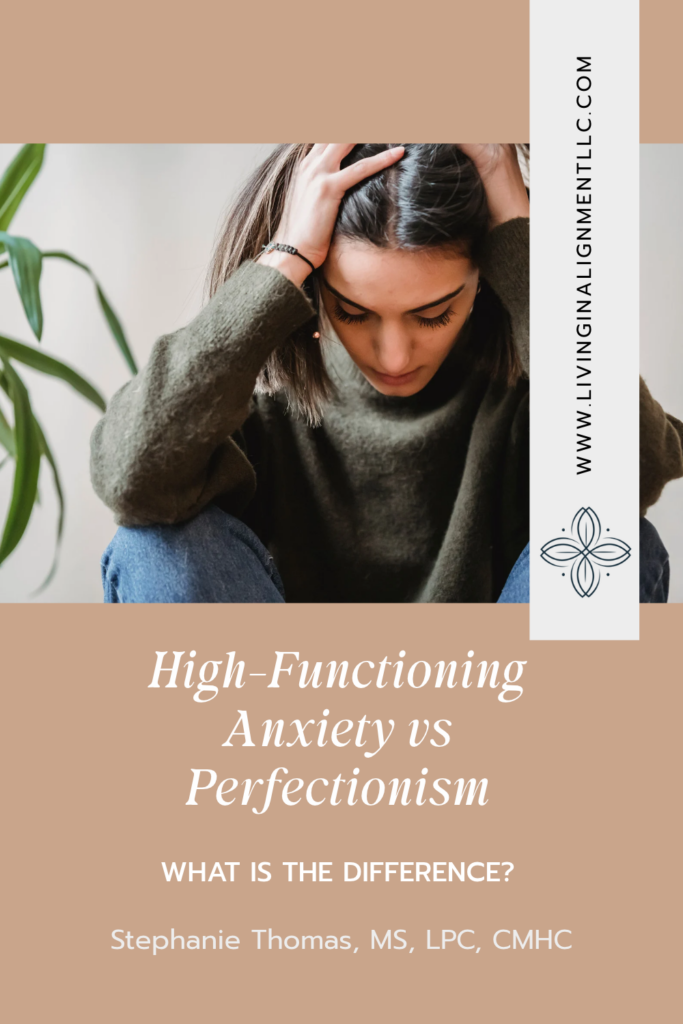
You’re driven by a relentless urge to do more and a motor inside that doesn’t know how to slow down, much less shut off. Rest feels like an unearned luxury – or worse, something to feel guilty about. Your mind doesn’t settle, you constantly replay conversations, anticipate worst-case scenarios, or wonder what people think of you.
Many people use the terms high-functioning anxiety and perfectionism interchangeably. While they frequently show up together, they are not the same thing. Understanding the distinction behind each is the first step toward breaking free from the exhaustion cycle without losing your drive.
A Glance at High-Functioning Anxiety vs. Perfectionism:
| Feature | High-Functioning Anxiety | Perfectionism |
| Primary Motivator | Fear & Avoidance: Fear of catastrophic outcomes, disappointing others, or losing control. | Standards & Identity: The belief that self-worth is tied strictly to flawless performance. |
| Internal Feeling | Persistent dread, physical tension, racing thoughts, difficulty sleeping. | Intense self-criticism, guilt over rest, feeling like “it’s never enough.” |
| Behavioral Outcome | Over-preparing, saying “yes” to everything, trouble turning your brain off. | All-or-nothing thinking, procrastination loops, chronic over-editing. |
| The Core Belief | “If I don’t stay ahead of everything, something terrible will happen.” | “If I am not perfect, I am a failure.” |
What Is High-Functioning Anxiety?
High-functioning anxiety is not an official clinical diagnosis, but rather a descriptor for how anxiety manifests in people who continue to perform well externally despite internal distress. Those of us who are just wired differently and oftentimes it isn’t something that has always been a struggle – it often is the same driver that pushes them towards success.
Unlike anxiety in others that can cause freezing or avoidant behaviors (like staying in bed or skipping commitments), high-functioning anxiety propels you forward. Your anxiety channels itself into hyper-productivity, meticulous organization, and relentless effort.
Sounds great, but when that anxiety becomes intense without a way to cope, it can lead to things like burnout, addiction, and eating disorders. Let’s first explore how to spot it before it gets to that point.
What are the common signs of high-functioning anxiety?
- The “What-If” Loop: Your brain is constantly running worst-case scenario planning for work, relationships, or performance.
- Inability to Relax: Sitting still without doing something “productive” creates a surge of restlessness or guilt.
- Physical Symptoms: Chronic tension, jaw clenching, shallow breathing, or difficulty falling asleep because your mind won’t slow down.
- People-Pleasing: Saying “yes” to extra tasks or projects because saying “no” feels like inviting disappointment or conflict.
If those resonate and you are shaking your head, chances are you might also relate to the presence of the relentless pressure of that often comes alongside it.
What Is the Definition of Perfectionism?
Perfectionism isn’t just about the pressure to do well at something. At its core, perfectionism is an adaptive survival mechanism – a shield designed to protect you from shame, judgment, rejection, or failure. The dictionary of psychology gives a much more technical definition, to include flawless performance – which is so common for athletes and high-achievers to expect of themselves.
Perfectionists link their fundamental value as a human being to their outputs and achievements. When performance is high, you feel temporary relief. When performance drops or an error occurs, your self-worth takes a hit.
What are the Common Signs of Perfectionism?
- All-or-Nothing Thinking: If an outcome isn’t 100%, it feels like a total failure. There is no middle ground.
- Perfectionism Paralysis: Delaying the start of a task or project because the internal pressure to execute it flawlessly is overwhelming.
- Moving the Goalposts: Achieving a major milestone and immediately asking, “What’s next?” without taking a moment to celebrate or acknowledge the achievement.
- Hyper-Fixation on Flaws: Focusing entirely on the 5% that went wrong rather than the 95% that went right.
What are the types of Perfectionism?
Research suggests there is more pressure than every on this generation, often increasing risks for eating disorders, anxiety, and depression. There is the cultural narrative of “toxic achievement”, especially when success is broadcast at our fingertips through the never ending newsreel and social media.
There are three types of perfectionists identified:
- Self-oriented: those who strive for high standards set for themselves
- Other-oriented: holding others to unrealistic standards and expectations
- Socially prescribed: approval seeking and perception that others expect perfection
For many high-achievers, athletes, and professionals – high-functioning anxiety and perfectionism can go hand in hand. Anxiety activates a fear based thought, while perfectionism drives the overachieving of a perfect solution.
Perfectionism then becomes a tool used to keep anxiety satisfied. But because perfection is impossible to maintain, the standard keeps moving higher, leading directly to compounding concerns such as imposter syndrome, emotional exhaustion, and ultimately burnout.
How do you break the patterns of perfectionism and high-functioning anxiety?
Overcoming high-functioning anxiety and perfectionism doesn’t mean you have to stop caring, abandon your goals, or lower your standards. It means shifting from fear-driven achievement to values-based living.
Here is how specialized support helps create that shift:
1. Acceptance and Commitment Therapy (ACT)
Using evidence-based approaches like ACT, you learn how to “unhook” from rigid perfectionist thoughts and uncomfortable anxiety without letting them dictate your choices or rob you of peace.
2. Separating Self-Worth from Performance
You learn to detach your value as a person from your latest performance, grade, promotion, or statistic allowing you to strive for excellence from a place of confidence rather than fear.
3. Redefining Rest as Recovery
Just like an athlete requires rest days to build physical strength, high-performing minds require cognitive recovery to prevent burnout and maintain long-term mental toughness.
Ready to Take the Next Step?
You don’t have to sacrifice your internal peace to maintain your level of success. How do I know? Because I’ve been there. As a lifelong athlete, perfectionist, and anxious human – I know the way your mind is wired. The good news – you are not broken.
For more information on how you can break free and live a life in alignment with what matters:
- Therapy in Wisconsin & Utah: If you are seeking specialized virtual therapy for high-functioning anxiety, perfectionism, or burnout, I offer telehealth sessions tailored for high-achievers living in WI and UT.
- Performance Mindset Coaching Nationwide: If you are an athlete, entrepreneur, or leader looking to break through fear of failure and imposter syndrome, coaching is available nationwide.
Written by Stephanie Thomas, MS, LPC, CMHC
Licensed Professional Counselor (WI) and Clinical Mental Health Counselor (UT) & Performance Mindset Coach | Specializing in high-functioning anxiety, perfectionism, burnout, and sports performance.
Frequently Asked Questions:
What is high-functioning anxiety?
High-functioning anxiety is a pattern where chronic worry, fear of failure, and nervous system tension push someone to perform at an exceptionally high level instead of shutting down. On the outside, someone with high-functioning anxiety appears organized, productive, and successful, but inside they experience relentless racing thoughts, self-doubt, and the inability to relax.
How is high-functioning anxiety different from perfectionism?
High-functioning anxiety is driven by fear—such as the dread of making mistakes, losing control, or disappointing others.
Perfectionism is driven by identity and standards—the belief that your self-worth is entirely tied to flawless performance and achievement.
Can you have both high-functioning anxiety and perfectionism?
Yes, they frequently occur together. High achievers often use perfectionism as an unconscious defense mechanism to manage anxiety: “If I do everything without making a mistake, nothing bad can happen.” This combination can influence the formation of imposter syndrome and chronic burnout.
What kind of therapy works best for high-functioning anxiety and perfectionism?
Acceptance and Commitment Therapy (ACT) and Cognitive Behavioral Therapy (CBT) are among the most effective approaches. In my work I find that ACT specifically helps high achievers unhook from rigid standards, quiet catastrophic thoughts, and pursue meaningful goals without burning out. Drawing coping skills from both are helpful to meet the needs of each individual client, as well as addressing their overall health and wellness.
Leave a Reply
Know that I often hear from clients things like "you're so relatable, this is different than I thought it would be, I can be myself here, "... Maybe it's time to give it a try.

